Over the past decade, you’ve likely heard debates surrounding geoengineering—the deliberate modification of Earth’s environment to combat climate change. While its potential benefits might seem appealing, it’s important to consider the ethical implications that accompany such powerful technologies. Questions regarding environmental justice, risk distribution, and the moral responsibility of intervening in natural systems require your attention as you navigate this complex landscape. Understanding these ethical considerations will enable you to engage in informed discussions about the future of our planet and the technologies that may shape it.
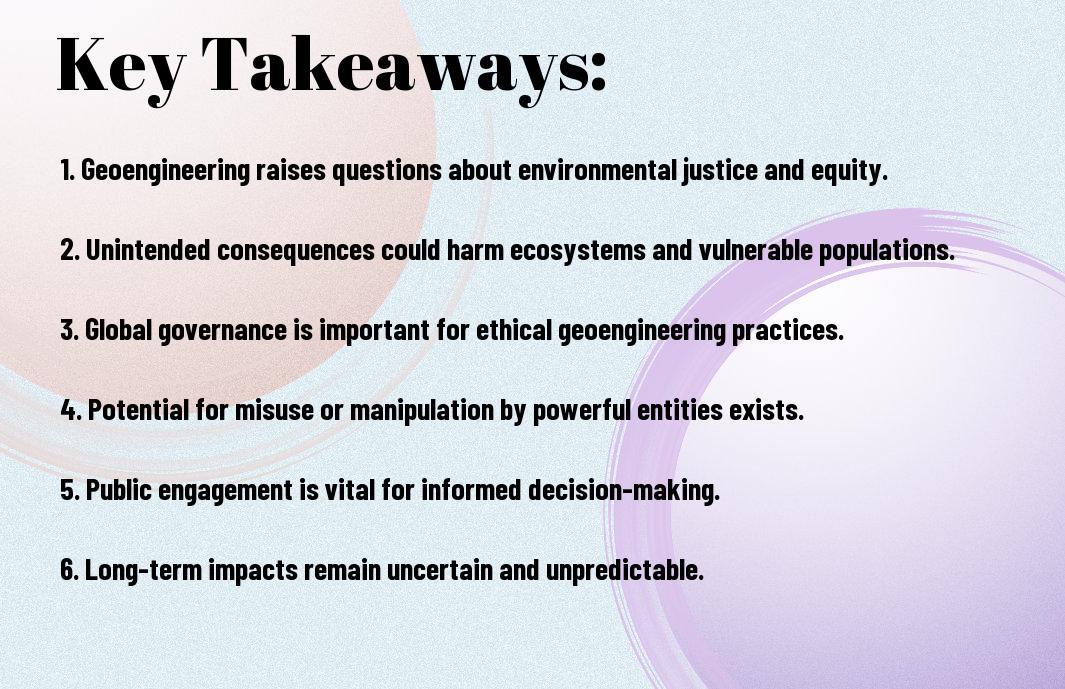
Key Takeaways:
- Unintended Consequences: Geoengineering could lead to unforeseen environmental impacts that may worsen existing problems.
- Governance Challenges: Effective regulation and oversight of geoengineering practices are necessary to prevent misuse and ensure equitable decision-making.
- Global Equity: The risks and benefits of geoengineering may not be distributed equally, raising ethical questions about who gets to decide on such interventions.
- Intergenerational Responsibility: Consideration of impacts on future generations is important when making decisions about implementing geoengineering solutions.
- Public Perception: Transparency and public engagement are vital to address societal concerns and garner trust regarding geoengineering technologies.
Understanding Geoengineering
While geoengineering presents various ways to mitigate climate change, it encompasses a complex array of techniques that can both positively and negatively impact our planet. Understanding these methods is imperative for evaluating their potential effects on ecosystems, societies, and ethical frameworks.
Definition and Types of Geoengineering
While you explore geoengineering, it’s important to define it as the deliberate manipulation of Earth’s climate systems. There are two primary categories of geoengineering technologies:
- Solar Radiation Management (SRM)
- Carbon Dioxide Removal (CDR)
After familiarizing yourself with these categories, you can better assess their implications and risks.
| Type | Description |
| Solar Radiation Management | Techniques aimed at reflecting sunlight away from Earth. |
| Carbon Dioxide Removal | Methods focused on reducing atmospheric CO2 levels. |
| Afforestation | Planting trees to absorb CO2 from the atmosphere. |
| Ocean Fertilization | Adding nutrients to oceans to stimulate carbon absorption. |
| Cloud Seeding | Injecting substances into clouds to enhance precipitation. |
Historical Context and Development
By examining the historical context of geoengineering, you can appreciate how the concept evolved in response to climate change challenges. Early ideas emerged in the 1970s, but significant advancements began in the 2000s as public awareness of climate issues surged.
A pivotal moment in geoengineering history occurred with the rise of influential scientific studies and the establishment of interdisciplinary research initiatives. You might find that the development of these technologies has sparked debate among scientists, policymakers, and ethicists regarding their effectiveness and potential unforeseen consequences. The ongoing discussions around public perception, governance, and long-term impacts continue to shape the future of geoengineering practices.

Ethical Considerations
Even as you explore the complex landscape of geoengineering, it’s crucial to address the ethical implications of altering Earth’s climate systems. The decisions surrounding geoengineering not only impact the planet but also touch upon social justice, environmental integrity, and future generations. You must carefully weigh the potential benefits against the ethical dilemmas they invoke, considering how your choices might affect diverse communities and ecosystems worldwide.
Moral Responsibility and Accountability
With the potential consequences of geoengineering efforts, you must ponder the moral responsibility that comes with such powerful technologies. If you engage in geoengineering, who will be held accountable for any adverse outcomes? It is vital to establish ethical frameworks that ensure equitable decision-making, prioritizing transparency and inclusivity in these complex discussions.
Risk Assessment and Unintended Consequences
Assessment of geoengineering projects requires a thorough understanding of the risks involved, as unintended consequences can have far-reaching effects. Without careful analysis and consideration of possible outcomes, you could unknowingly initiate long-term ecological disruptions or exacerbate existing social inequalities.
Hence, it is imperative for you to engage in comprehensive risk assessments that evaluate both immediate and long-term repercussions of geoengineering interventions. This process should include multidisciplinary perspectives to achieve a holistic understanding of potential impacts. By prioritizing assessments that account for ecological, social, and economic factors, you can promote informed decision-making that minimizes risks and enhances the ethical integrity of geoengineering endeavors.
Socioeconomic Impacts
Keep in mind that the socioeconomic impacts of geoengineering can reshape economies and societies. Implementing such technologies might favor wealthier nations that have the resources to invest in these solutions, potentially exacerbating existing inequalities. Additionally, there’s a risk that local communities could face unintended consequences, such as changes in climate patterns that affect agriculture or livelihoods. Your awareness of these potential disparities can inform discussions about the most ethical ways to approach geoengineering.
Equity and Environmental Justice
With the threat of climate change disproportionately affecting vulnerable populations, it’s critical to consider how geoengineering may further entrench systemic inequities. You should be aware that marginalized communities often bear the brunt of environmental degradation, and any geoengineering solutions must prioritize fairness and inclusivity to avoid exacerbating these challenges.
Implications for Global Governance
Before the deployment of geoengineering technologies, you need to consider the implications for global governance, as these initiatives could alter existing international relations and norms. Coordinating efforts among nations will be vital to ensure that these technologies are managed ethically and fairly.
Consequently, the introduction of geoengineering raises questions about who governs these technologies and how decisions are made. You may find that international regulatory frameworks become necessary to address the political complexities and power dynamics involved in deploying geoengineering solutions. Ensuring that all nations have a voice in these discussions is key to achieving equitable outcomes, avoiding geopolitical conflicts, and promoting collective action against climate change. Your engagement in these dialogues is vital for shaping the future of global governance in the context of geoengineering.
Public Perception and Acceptance
For geoengineering initiatives to be effective, public perception and acceptance play a vital role. You may find that understanding the diverse viewpoints within the community is vital for fostering dialogue and addressing fears regarding ethical implications. This acceptance can influence policy-making, funding, and the overall success of projects aimed at combating climate change.
Communication and Education
Beside fostering dialogue, effective communication and education about geoengineering are fundamental to demystifying the technology and its potential effects. By engaging in transparent discussions, you can better understand the complexities of geoengineering and the trade-offs involved. This knowledge empowers you to make informed opinions and advocate for responsible approaches to climate solutions.
Role of Stakeholders in Decision-Making
The involvement of various stakeholders in decision-making processes is vital for equitable and effective geoengineering policies. You should recognize that these stakeholders range from government officials and scientists to community members and industry leaders. Each of them has a unique perspective, and their input can greatly influence the direction of geoengineering projects.
Communication among stakeholders is imperative to ensure that all voices are heard and valued in the decision-making process. Your engagement can facilitate collaborative efforts that bridge gaps in understanding and prioritize the collective good. This approach encourages the development of transparent policies that reflect diverse concerns, ultimately fostering a sense of ownership and responsibility among the public.
Regulatory Frameworks
Not all geoengineering initiatives are created equal. As you explore the complex landscape of geoengineering, it’s crucial to understand how regulatory frameworks vary widely across regions and projects. These frameworks are designed to navigate the ethical, environmental, and social dimensions of geoengineering practices while ensuring transparency and accountability. You must consider how different governance systems can influence the implementation and effectiveness of geoengineering solutions.
National and International Policies
Below are some key policies that guide geoengineering efforts on both the national and international levels. Various countries have begun to draft legislation that outlines their stance on geoengineering, often reflecting public sentiment and scientific consensus. Additionally, international treaties play a role in regulating projects that transcend borders, ensuring that your country’s actions align with global sustainability goals.
Legal Implications of Geoengineering Projects
The legal landscape surrounding geoengineering is complex and evolving. As you research into this topic, you will find numerous implications for liability, environmental responsibility, and human rights. The ambiguity in jurisdiction and accountability raises questions about who is held responsible when geoengineering projects produce unintended consequences.
Implications of geoengineering projects can present significant legal challenges for both researchers and implementers. You may find that existing environmental laws do not adequately cover the unique risks associated with geoengineering, leading to potential litigation and regulatory hurdles. As you consider involvement in geoengineering efforts, understanding these legal frameworks and the potential for disputes over environmental impacts or human rights issues is crucial for navigating this intricate terrain.
Case Studies
To understand the ethical implications of geoengineering, you can explore various case studies that highlight the complexities involved. Some notable examples include:
- Iron Fertilization in the Southern Ocean: Aimed to enhance carbon sequestration, but raised concerns about ecosystem disruption.
- Stratospheric Aerosol Injection: Proposed to reflect sunlight, yet could lead to unpredictable weather patterns.
- Cloud Seeding: Used in various countries to increase rainfall, although its effectiveness is debated.
- Albedo Modification: Involves changing land surfaces but may affect local climates adversely.
For a deeper probe some ethical issues in geoengineering, you can visit Some ethical issues in geoengineering – C2G.
Successful Implementations
With advancements in technology, several geoengineering projects have shown promising results. For instance, projects focused on carbon capture and storage (CCS) have successfully removed significant amounts of CO2 from the atmosphere, while afforestation initiatives have resulted in increased carbon sinks. Such successful implementations provide valuable insights for future endeavors in climate intervention.
Controversial Proposals and Their Outcomes
By examining controversial proposals such as geoengineering schemes, you uncover mixed reactions and varying outcomes. These initiatives often spark heated debates surrounding their ethical, environmental, and social implications.
Their consequences can be wide-ranging. For instance, large-scale solar radiation management efforts raise questions about governance, potential harm to biodiversity, and the rights of affected communities. Initial studies indicate that while some techniques may provide short-term climate relief, their long-term impacts are still largely unknown, making ongoing evaluation imperative as you consider the viability of such interventions.
Summing up
From above, the ethical implications of geoengineering demand your careful consideration. As you explore potential climate solutions, you must weigh the risks of unintended consequences against your desire for immediate action. Engaging in dialogue about your moral responsibilities and the long-term effects on ecosystems and societies can help you navigate the complex landscape of geoengineering approaches. Ultimately, it’s vital for you to reflect on how these technologies align with your values and the kind of future you envision for the planet.
Q: What are the main ethical concerns surrounding geoengineering?
A: The main ethical concerns surrounding geoengineering include issues of justice, governance, and unintended consequences. Justice refers to the potential for geoengineering to disproportionately affect vulnerable populations and countries, raising questions about equity and fairness. Governance involves the lack of international regulations and oversight, making it challenging to ensure responsible implementation. Unintended consequences, such as environmental disruption or moral hazard, highlight the risks of altering complex ecological systems without fully understanding the repercussions.
Q: How does geoengineering impact global inequalities?
A: Geoengineering has the potential to exacerbate global inequalities in several ways. Wealthier nations may be more capable of implementing geoengineering technologies, which could lead to a scenario where rich countries benefit from climate interventions while poorer nations face the negative consequences. Furthermore, developing countries might lack the resources to adapt to changes or recover from any adverse effects of geoengineering efforts, creating a disparity in climate resilience and adaptive capacity among nations. This raises profound ethical questions about responsibility and the moral obligation of wealthier nations to support those most affected.
Q: What role does public participation play in geoengineering decisions?
A: Public participation is critical in geoengineering decisions, as it fosters transparency and accountability in a field often dominated by scientific and political elites. Engaging diverse stakeholders, including local communities, environmental groups, and indigenous populations, ensures that a wide array of perspectives and values are considered. Moreover, inclusive dialogue can help identify potential social and ethical implications, reduce public distrust, and create a more democratic approach to decision-making. Ultimately, public involvement can drive more equitable outcomes and enhance legitimacy in geoengineering efforts.


Recent Comments