Geology

Science Bulletins: Shrinking Glaciers—A Chronology of Climate Change

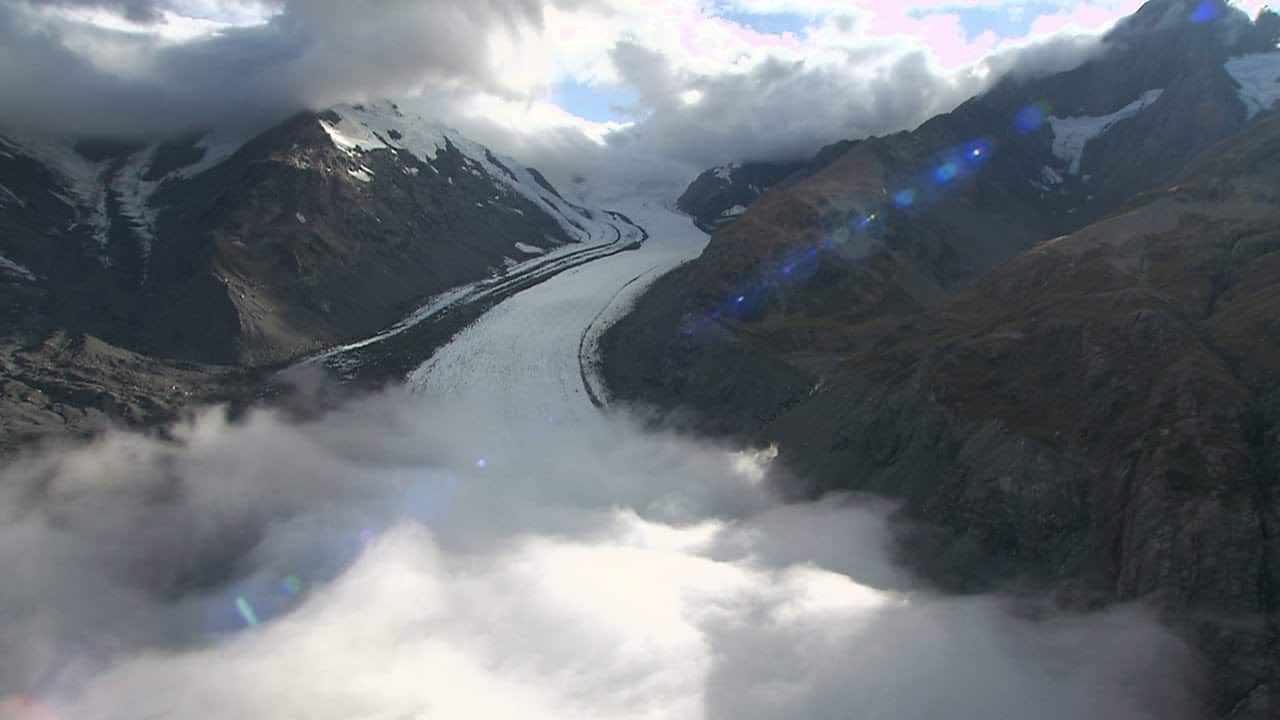
Analysis of Earth's geologic record can reveal how the climate has changed over time. Scientists in New Zealand are examining samples from the rocky landscape once dominated by glaciers. They are employing a new technique called surface exposure dating, which uses chemical analysis to determine how long minerals within rocks have been exposed to the air since the glaciers around them melted. Comparisons of this data with other climate records have revealed a link between glacial retreat and rising levels of carbon dioxide in the air, findings that are informing scientists' understanding of global climate change today.

Science Bulletins is a production of the National Center for Science Literacy, Education, and Technology (NCSLET), part of the Department of Education at the American Museum of Natural History. Find out more about Science Bulletins at http://www.amnh.org/sciencebulletins/.

Related Links

Glacier advance in southern middle-latitudes during the Antarctic Cold Reversal
http://www.nature.com/ngeo/journal/v3/n10/full/ngeo962.html

Glacier retreat in New Zealand during the Younger Dryas stadial
http://www.ncbi.nlm.nih.gov/pubmed/20829791

The Last Glacial Termination
http://www.sciencemag.org/content/328/5986/1652.full

GNS Science
http://www.gns.cri.nz/

University of Maine: Department of Earth Sciences
http://umaine.edu/earthsciences/research/

Lamont-Doherty Earth Observatory
http://www.ldeo.columbia.edu/

Columbia University: Department of Earth and Environmental Sciences
http://eesc.columbia.edu/

Volcanoes: A Forge for Climate Change | Peter Ward | TEDxWilmington

Dr. Peter Langdon Ward worked 27 years as a geophysicist with the United States Geological Survey, being featured on Good Morning America and winning two national awards for explaining science to non-scientists. Nine years ago, while in retirement, he found reliable data suggesting that volcanic eruptions not only cool the earth for a few years, something that is well known, but also can warm the earth substantially. How could this be? Realizing the importance of figuring this out, he set off on a full-time quest trying to understand in detail how volcanism has controlled climate throughout Earth history, throughout the evolution of our species, throughout written history, and why 2015 is the hottest year on record.

Dr. Peter Langdon Ward worked 27 years as a geophysicist with the United States Geological Survey, being featured on Good Morning America and winning two national awards for explaining science to non-scientists. Nine years ago, while in retirement, he found reliable data suggesting that volcanic eruptions not only cool the earth for a few years, something that is well known, but also can warm the earth substantially. How could this be? Realizing the importance of figuring this out, he set off on a full-time quest trying to understand in detail how volcanism has controlled climate throughout Earth history, throughout the evolution of our species, throughout written history, and why 2015 is the hottest year on record.

This talk was given at a TEDx event using the TED conference format but independently organized by a local community. Learn more at http://ted.com/tedx

News on Climate Change Skip to content