Just how much does Fashion Week affect carbon emissions? As you investigate into the world of high fashion, it’s vital to understand the environmental costs tied to these glamorous events. From jet-setting designers to elaborate runway shows, the fashion industry contributes significantly to carbon emissions. To illustrate this impact, you can check out this Chart: The Hidden Carbon Footprint of the Fashion Industry. By grasping the environmental ramifications, you can make informed choices about your own fashion consumption and support sustainable practices.
Key Takeaways:
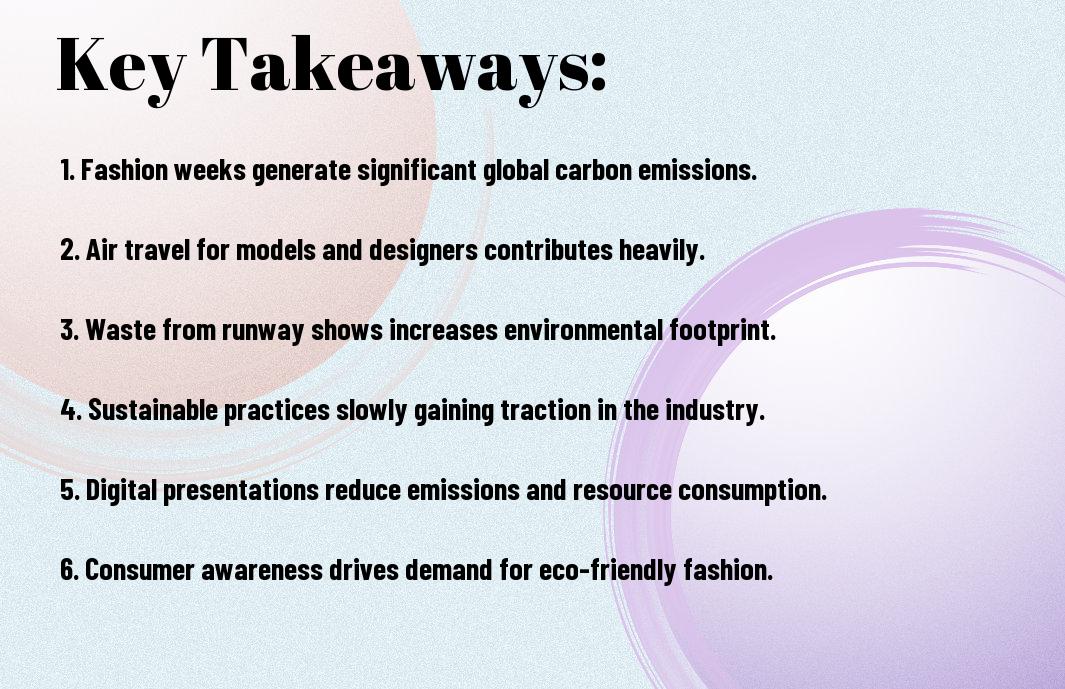
- High Carbon Footprint: Fashion Week events significantly contribute to carbon emissions due to extensive travel, extravagant shows, and elaborate sets.
- Fast Fashion Cycle: The pressure to showcase new collections rapidly results in increased production and waste, driving up carbon outputs.
- Green Initiatives: Some brands are now adopting sustainable practices, such as eco-friendly materials and reduced travel, aiming to decrease their environmental impact.
- Consumer Awareness: Awareness about the environmental effects of fashion weeks is growing among consumers, influencing brands to consider their carbon footprint.
- Future Directions: The industry’s evolution includes potential shifts towards digital fashion presentations, which could lower carbon emissions significantly.

The Role of Fashion Week in the Global Fashion Industry
To understand the impact of Fashion Week, you must recognize its significant role in shaping trends, influencing consumer behavior, and setting the stage for designers worldwide. This dynamic event not only showcases innovative designs but also serves as a launching pad for emerging talents, thereby reinforcing the interconnectedness of the global fashion landscape.
Event Overview and Scale
On a grand scale, Fashion Week encompasses multiple events held annually in major cities, including New York, Paris, Milan, and London. You’ll find an extensive array of designers presenting their collections to industry influencers, buyers, and the media. This collective effort draws global attention, making it a pivotal moment in the fashion calendar.
Economic Implications
Besides its cultural significance, Fashion Week also has profound economic implications for the industry and local economies. You should consider how these events drive tourism, create jobs, and generate revenue through various sectors like hospitality, retail, and media.
Week after week, the frenzy around Fashion Week stimulates financial activities that ripple through the economy. As buyers purchase collections for stores, and media coverage amplifies brand visibility, the economic spikes can be substantial. Local businesses, from hotels to restaurants, benefit from increased foot traffic and spending, and you can observe how these events not only promote fashion but act as economic engines, proving that the intersection of creativity and commerce is immensely powerful.
Carbon Footprint of Fashion Events
One of the primary concerns regarding fashion week is its overall carbon footprint. These large-scale events generate significant greenhouse gas emissions due to their production, including the sourcing of materials, garment transportation, and on-site waste management. As someone invested in fashion, you’ll find it crucial to understand how these activities impact the environment, as they contribute to a larger narrative about sustainability and the need for more eco-friendly practices within the industry.
Transportation Emissions
One major source of carbon emissions during fashion events is transportation. You should consider that designers, models, and attendees often travel long distances to showcase and view collections. This not only includes air travel but also local transit methods such as taxis and shuttles. The environmental impact accumulates quickly, highlighting the need for the fashion industry to adopt more sustainable transportation solutions.
Energy Consumption in Venues
One key factor contributing to the carbon footprint of fashion events is the energy consumption of the venues. These spaces require substantial energy for lighting, heating, and cooling, especially when accommodating large crowds. You may want to consider how the choice of venue and the efficiency of its energy use can significantly affect the total emissions produced during the event.
Energy consumption in fashion event venues is often underestimated. Energy use spikes with elaborate runway setups, extensive lighting, and climate control, all designed to create an immersive experience. As you attend these events, it’s worth evaluating how the venue manages energy efficiency. Choosing renewable energy sources or adopting energy-efficient technologies can significantly reduce your carbon footprint and set a precedent for more sustainable practices within the industry.
Sustainable Practices in Fashion Week
Now, as the fashion industry increasingly recognizes its ecological impact, Fashion Week is beginning to embrace sustainable practices. Initiatives like digital show formats and eco-conscious materials are redefining how you perceive style and responsibility in fashion. To learn more about the topic, explore How Best to Manage The Carbon Footprint On The Runway?.
Eco-Friendly Designers
Fashion is evolving as eco-friendly designers are reshaping the industry with innovative collections that prioritize sustainability. These designers focus on reducing waste and utilizing organic, biodegradable materials, appealing to your desire for stylish yet responsible clothing choices.
Innovation in Materials and Production
EcoFriendly practices are making waves in the fashion scene, with a focus on materials that have minimal environmental impact. Techniques such as upcycling, low-water dyeing, and the use of natural fibers are now common, allowing you to enjoy fashionable pieces without compromising on sustainability.
Designers are continuously exploring new ways to incorporate sustainable materials and ethical production methods, from biodegradable textiles to recycled plastics. By championing circular fashion and transparent supply chains, they pave the way for a more sustainable future in the industry. As you make your fashion choices, supporting these initiatives strengthens the movement towards responsible consumption and helps reduce carbon emissions associated with the industry.
The Influence of Media Coverage
For the fashion industry, media coverage serves as a double-edged sword. While it amplifies the spectacle of Fashion Week, it also raises questions about its environmental impact. As outlined in the article on Figuring Out Fashion Week’s Carbon Problem, the way media portrays these events can significantly influence public perception and set the tone for discussions about sustainability.
Promotion of Sustainability
Above all, media outlets have the power to promote sustainable fashion practices. By showcasing designers who prioritize eco-friendly materials and responsible production methods, they can inspire brands and consumers alike to adopt more sustainable approaches. When you see these stories highlighted, it encourages a shift in priorities within the industry.
The Role of Social Media
Along with traditional media, social media plays a pivotal role in shaping consumer attitudes toward Fashion Week and its carbon footprint. The immediacy and widespread reach of platforms like Instagram and Twitter allow you to actively engage with the conversation surrounding fashion sustainability.
It can also help in amplifying messages from influencers and organizations advocating for eco-conscious practices. By sharing innovative ideas and success stories in sustainable fashion, social media empowers you to make informed choices and support brands that align with your values, driving change at the grassroots level. This collective engagement creates a ripple effect, encouraging industry players to prioritize sustainability as a core component of their practices.
Case Studies: Fashion Weeks Around the World
Your understanding of the environmental impact of global fashion events can be informed by examining case studies from various fashion weeks. These events highlight their carbon footprints and sustainability efforts through quantitative data:
- Paris Fashion Week: 99,000 tons of CO2 emitted per event.
- New York Fashion Week: 70,000 tons of CO2 emitted annually.
- London Fashion Week: Approximately 60,000 tons of carbon emissions.
- Milan Fashion Week: 45,000 tons of CO2 generated.
Paris Fashion Week
World-renowned, Paris Fashion Week targets specific sustainability goals yet still emits around 99,000 tons of CO2 per event. The industry is exploring greener alternatives, but trends are still predominantly fast fashion driven, significantly contributing to carbon emissions.
New York Fashion Week
Before delving deeper, it’s important to note that New York Fashion Week generates approximately 70,000 tons of carbon emissions each year, primarily from transportation and venue operations.
Due to its scale, New York Fashion Week has been increasingly scrutinized for its environmental impact. While the city has initiated sustainable practices, such as showing eco-friendly collections, the high carbon footprint remains a concern. Stakeholders are urged to collaborate and implement more sustainable methods, such as digital shows and reduced transportation emissions, to lower their overall environmental impact.
Recommendations for Reducing Carbon Emissions
All stakeholders in the fashion industry must commit to actionable strategies aimed at minimizing carbon emissions. This includes adopting eco-friendly materials, optimizing supply chains for efficiency, and promoting sustainable fashion practices to reduce waste. Encouraging transparency in production processes can empower consumers to make informed choices. By integrating these recommendations, you can contribute to a more sustainable future for fashion.
Implementing Sustainable Practices
After assessing your current practices, you can implement sustainable alternatives that prioritize environmental responsibility. Consider switching to organic or recycled materials and reducing water usage in production. Additionally, adopting renewable energy sources for manufacturing can effectively lower your carbon footprint while enhancing your brand’s appeal to eco-conscious consumers.
Engaging Stakeholders
Practices that involve engaging stakeholders can significantly amplify your efforts in reducing carbon emissions. Communication with suppliers, manufacturers, and consumers allows you to create a collective commitment to sustainability. By fostering collaboration within your network, you can share resources, innovation, and strategies to address the environmental challenges posed by the fashion industry.
Stakeholders, including brands, suppliers, and consumers, play a vital role in implementing effective change. When you engage these parties in meaningful dialogue, it opens up opportunities for innovative sustainable solutions tailored to address carbon emissions. The exchange of ideas can lead to improved practices across the board and encourages a shared responsibility for environmental stewardship throughout the fashion supply chain.
Conclusion
From above, it’s clear that Fashion Week significantly influences carbon emissions, drawing attention to the industry’s environmental impact. You can recognize that the event accelerates fast fashion trends, contributing to overproduction and waste. As you engage with fashion, consider your role in promoting sustainability, supporting eco-friendly brands, and advocating for a shift towards more responsible practices. By understanding your choices, you can help mitigate the footprint of this glamorous yet unsustainable phenomenon.
Q: How does Fashion Week contribute to carbon emissions?
A: Fashion Week contributes to carbon emissions primarily through transportation, production processes, and energy consumption. The extensive travel by models, designers, and other industry professionals to attend shows results in significant greenhouse gas emissions. Additionally, the manufacturing of garments often involves energy-intensive processes, leading to higher carbon footprints. Furthermore, the events themselves require considerable energy for lighting, heating, and sound systems, further contributing to overall emissions.
Q: What measures are being taken to reduce the carbon footprint of Fashion Week?
A: Many Fashion Weeks around the world are implementing various measures to reduce their carbon footprint. Some initiatives include showcasing sustainable designers who utilize eco-friendly materials and practices. Organizers are also increasingly focusing on virtual or hybrid formats, which can decrease the need for travel. Additionally, there are calls for stricter guidelines on waste management and energy usage during the events, driving a shift towards more environmentally responsible practices in the industry.
Q: How can consumers influence the sustainability of Fashion Weeks?
A: Consumers play a vital role in shaping the sustainability of Fashion Weeks through their purchasing choices and advocacy. By supporting brands that prioritize sustainable practices and ethical production, consumers can drive demand for environmentally friendly fashion. Additionally, educating others about the environmental impact of the fashion industry and participating in discussions around sustainable fashion trends can amplify the message. Engaging on social media platforms to promote sustainable designers and initiatives also contributes to a broader awareness and change within the fashion culture.


Recent Comments