Many people underestimate the expansive economic potential attached to clean energy jobs. As the world shifts towards sustainable practices, you have the opportunity to engage in a rapidly growing sector that not only contributes to environmental goals but also enhances your local economy. Clean energy jobs offer diverse career paths, ensuring job security while promoting innovation and development in your community. By understanding the economic benefits of these positions, you can appreciate how they could positively impact your financial future and the well-being of the planet.
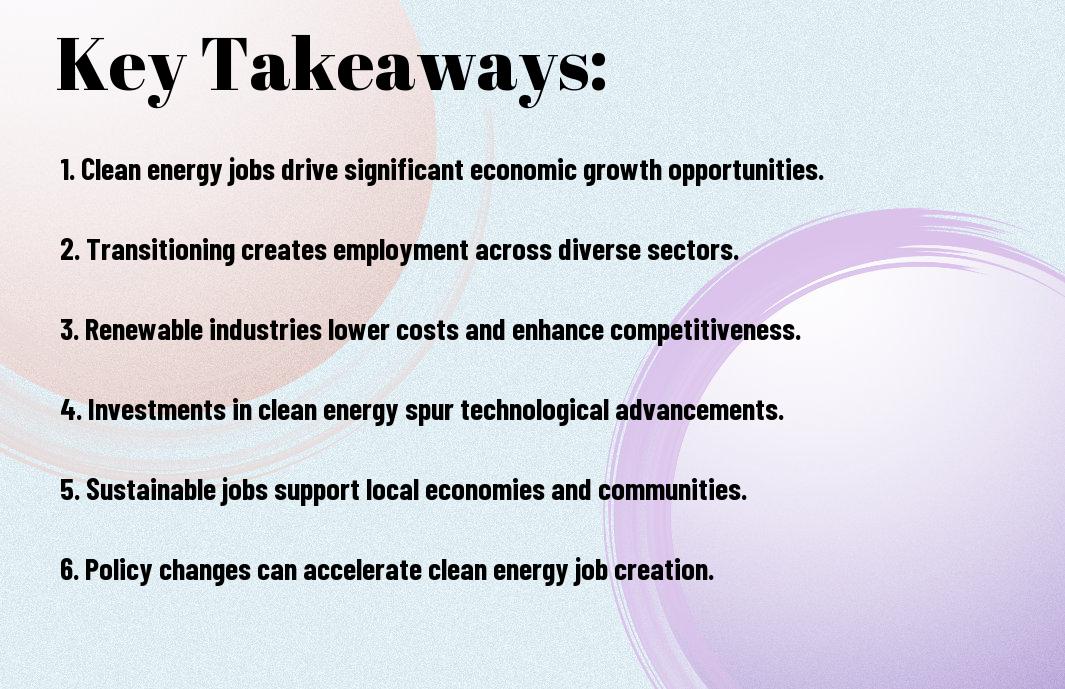
Key Takeaways:
- Job Creation: Clean energy sectors can create millions of new jobs across various skill levels, driving economic growth and community development.
- Investment Opportunities: Rising demand for renewable energy technologies presents significant investment opportunities in both established and emerging markets.
- Environmental Benefits: Transitioning to clean energy jobs can lead to reduced carbon emissions, supporting environmental sustainability initiatives.
- Economic Resilience: Clean energy jobs contribute to a more resilient economy by diversifying energy sources and reducing dependence on fossil fuels.
- Skill Development: The shift towards clean energy necessitates workforce training and skill development initiatives, fostering innovation and educational growth.
The Current Landscape of Clean Energy Employment
For many individuals looking to enter the workforce, clean energy employment represents a rapidly expanding field filled with diverse opportunities. As climate change initiatives gain momentum, industries focused on renewable technologies, energy efficiency, and sustainable practices are increasingly in demand, paving the way for significant job growth and innovation.
Overview of Clean Energy Jobs
On the frontlines of the clean energy revolution, you will find a variety of job roles, from skilled trades to scientific research positions. Solar and wind energy sectors, energy efficiency programs, and electric vehicle infrastructure are just a few examples of the areas where passionate individuals can find fulfilling careers that contribute to a sustainable future.
Growth Trends and Projections
One of the most exciting aspects of the clean energy sector is its rapid growth. As technology advances and policies shift toward sustainability, this industry is projected to create millions of new jobs over the next decade, offering promising career paths for those eager to make a difference.
In addition to the immediate job creation, projections indicate that clean energy jobs will not only increase in number but also evolve in scope and complexity. You can expect stronger demand for highly skilled positions in areas like research and development, smart grid technology, and energy management systems, reflecting a broader transformation within the energy landscape that prioritizes innovation and sustainability. By preparing for these shifts, you can position yourself for a successful career in this dynamic sector.
Economic Benefits of Clean Energy Jobs
It is imperative to understand that clean energy jobs not only contribute to environmental sustainability but also offer significant economic benefits. These jobs are proliferating across various sectors, enhancing local economies and enabling communities to thrive. As the demand for renewable energy sources grows, your area can reap the rewards of job creation, innovation, and increased economic stability, making clean energy a vital component of your economic future.
Job Creation Potential
With the transition to clean energy, you can expect a substantial increase in job opportunities. Renewable sectors, such as solar and wind, are rapidly expanding, requiring a diverse workforce to meet rising demands. This growth translates to thousands of new jobs in areas ranging from manufacturing to installation, ultimately bolstering your local economy and providing career opportunities for many individuals.
Economic Diversification and Resilience
Economic diversification is key to building resilience within a community. By investing in clean energy, you can help your local economy become less dependent on traditional energy sources or industries that may be vulnerable to market fluctuations.
Economic diversification through clean energy initiatives can shield you from the inevitable ups and downs of the fossil fuel market. By embracing renewable energy, your community can foster new industries and attract investments that lead to stable employment opportunities. This shift not only reduces reliance on singular energy sources but also enhances your community’s ability to adapt to changes, providing a more sustainable and secure economic future for you and your neighbors.
Skills and Education for the Clean Energy Workforce
Despite the rapid growth of clean energy industries, many individuals remain unaware of the specific skills and educational qualifications required to enter this field. To thrive in a clean energy career, you must equip yourself with a unique blend of technical and soft skills, along with a commitment to ongoing learning. As environmental technologies evolve, staying updated will enhance your employability and position you as a valuable asset in this booming sector.
Required Skills and Training Programs
Before initiateing on your clean energy journey, it is crucial to identify the key skills that employers seek. This typically includes technical abilities in areas such as solar technology, wind energy, and energy efficiency. Additionally, training programs, apprenticeships, and certifications will help you gain hands-on experience and formal recognition in your chosen specialty.
Role of Education Institutions
On your path to a clean energy career, educational institutions play a significant role by offering tailored programs that meet industry demands. These programs not only provide theoretical knowledge but also emphasize practical skills through workshops, labs, and partnerships with clean energy companies.
Further enhancing their role, many educational institutions collaborate with government agencies and private sectors to ensure their curriculum aligns with current industry needs. This collaboration creates opportunities for internships and job placements, allowing you to build professional networks while gaining relevant experience. By choosing programs that are responsive to the evolving landscape of clean energy, you can position yourself for a successful career in this vital sector.
Impact on Local Economies
Unlike traditional energy sectors, clean energy jobs significantly invigorate local economies by creating a diverse range of employment opportunities. These positions not only enhance income levels but also stimulate local spending, thereby promoting economic growth. As clean energy initiatives expand, communities experience an influx of investments, leading to improved infrastructure and increased demand for local services. This transformation can help reduce unemployment and uplift marginalized areas, ensuring a sustainable economic future for you and your community.
Case Studies of Clean Energy Initiatives
With numerous successful clean energy projects showcasing their economic benefits, the following case studies highlight the potential impact:
- California Solar Initiative: Generated over 20,000 jobs and contributed $3.5 billion to local economies since its inception in 2007.
- Wind Farm in Texas: Created approximately 14,000 jobs and spurred a $9 billion investment in 2019 alone.
- Massachusetts Clean Energy Program: Supported 98,000 clean energy jobs, resulting in $1.4 billion in local revenue between 2018 and 2020.
- New York’s Green Jobs Initiative: Resulted in 70,000 jobs and over $5 billion in public and private investments in renewable energy.
Community Benefits and Challenges
Local communities can reap various benefits from clean energy initiatives, including job creation, enhanced infrastructure, and improved public health. However, challenges may arise, such as ensuring equitable access to these opportunities and addressing the concerns of those affected by the transition. It is vital for policymakers and stakeholders to actively engage with community members to mitigate these challenges while maximizing benefits.
The shift toward clean energy can bring significant advantages to your community, from boosting job availability to fostering economic resilience. Yet, it also requires careful navigation of potential obstacles, such as ensuring that everyone has equal access to these jobs or resources and addressing any environmental injustices that may surface. By prioritizing open dialogue and inclusive strategies, your community can thrive as it launchs on this transformative journey towards sustainable energy. Understanding these dynamics is crucial for you to advocate for effective and equitable clean energy policies that benefit everyone.
Policy Framework Supporting Clean Energy Jobs
All effective clean energy jobs rely on a robust policy framework that encourages investment and innovation. Policymakers play a vital role in shaping the future of clean energy through supportive regulations and incentives. You can read more about this in What the Newest Energy Jobs Report Says About …
Government Incentives and Regulations
An array of government incentives and regulations is crucial to the growth of clean energy jobs. These can include tax credits, grants, and subsidies that encourage businesses and individuals to transition to renewable energy sources. Programs that provide funding for job training can also ensure that your workforce is equipped with the necessary skills in this evolving sector.
International Comparisons and Best Practices
The approach to clean energy jobs varies significantly across different countries, offering valuable lessons for local implementation and policy-making. Below is a comparison of various international strategies:
International Strategies on Clean Energy Jobs
| Country | Approach |
|---|---|
| Germany | Feed-in tariffs to promote renewable energy sources. |
| Denmark | Investment in wind energy technology and job training. |
| China | Massive solar energy initiatives and manufacturing incentives. |
| United States | State-level renewable portfolio standards and federal tax incentives. |
International best practices not only highlight successful strategies but also guide your policy development in clean energy jobs. Learning from countries like Germany and Denmark can inform your approach to investments, training, and regulatory frameworks that foster innovation and job growth in clean energy sectors.
Barriers to Growth in Clean Energy Employment
Not all aspects of the clean energy sector are flourishing. Despite the promising clean energy jobs surge by 142,000, growing twice as fast …, various barriers hinder your potential to expand within this industry. From economic uncertainty to regulatory roadblocks, understanding these barriers is important for those eyeing a career in clean energy.
Economic and Regulatory Challenges
By navigating economic instability and evolving regulations, you may face challenges that impact the growth of clean energy employment. Market fluctuations and inconsistent policy frameworks can create uncertainty, deterring investment in renewable energy projects and stalling job creation. Stronger support from lawmakers and stable economic conditions are important for fostering growth in this sector.
Social and Infrastructure Obstacles
Barriers such as social perceptions and inadequate infrastructure can pose significant challenges to the growth of clean energy jobs. You might find that local communities may not fully embrace clean energy initiatives, limiting public support. Existing infrastructure might also be ill-equipped to leverage new technologies, complicating efforts to expand employment opportunities in the sector.
Hence, addressing these social and infrastructure obstacles requires a concerted effort from both the community and the government. You will need to advocate for improved public outreach to educate communities about the benefits of clean energy. Additionally, investing in modern infrastructure is necessary to support new technologies, facilitating job creation and ensuring a more robust clean energy sector for the future.
Conclusion
Summing up, the economic potential of clean energy jobs presents an exciting opportunity for you to engage in a growing sector that not only contributes to sustainability but also enhances economic stability. As demand for renewable energy sources rises, your involvement in this field can lead to significant professional growth and positive environmental impact. By investing your time and resources in clean energy careers, you can play a vital role in shaping a sustainable future while benefiting from the economic advantages that come with it.
Q: What are clean energy jobs and why are they important for the economy?
A: Clean energy jobs refer to employment opportunities in sectors that focus on renewable energy sources, such as solar, wind, hydroelectric, and geothermal power. These jobs also encompass energy efficiency and conservation efforts. Their importance lies in the fact that they not only contribute to reducing greenhouse gas emissions and combating climate change but also stimulate economic growth by creating new industries, fostering innovation, and providing stable, well-paying jobs. As the world shifts toward sustainable energy solutions, these jobs are instrumental in moving economies toward a more resilient and sustainable future.
Q: How can transitioning to clean energy lead to job creation?
A: Transitioning to clean energy generates job creation through various channels. First, it requires a workforce to install, maintain, and operate renewable energy systems. This encompasses labor in manufacturing, construction, and servitude related to energy projects. Furthermore, demand for skilled workers in research, development, and technology innovation increases as advancements in clean energy continue. As governments and private sectors invest more heavily in clean energy initiatives, new businesses emerge to meet growing energy needs, resulting in further employment opportunities across multiple sectors.
Q: What skills are necessary for jobs in the clean energy sector?
A: Jobs in the clean energy sector typically require a combination of technical skills and soft skills. Technical skills may include knowledge of renewable energy technologies, engineering, environmental science, and installation processes. Familiarity with regulatory frameworks and financing options is also valuable. Additionally, soft skills such as problem-solving, communication, and teamwork are necessary for collaborating within multidisciplinary teams and engaging with clients or stakeholders. Education and training programs, including vocational training, certifications, and degrees in relevant fields, help equip individuals with the necessary skills to succeed in this growing industry.


Recent Comments