There’s a growing debate around whether climate action should be driven by market forces or led by governmental intervention. As you consider the implications of climate policy, it’s vital to explore how market-driven solutions can potentially foster innovation, efficiency, and investment in sustainable practices. This blog post will guide you through the arguments for and against a market-centric approach to climate action, helping you understand the potential impacts on both the environment and the economy.

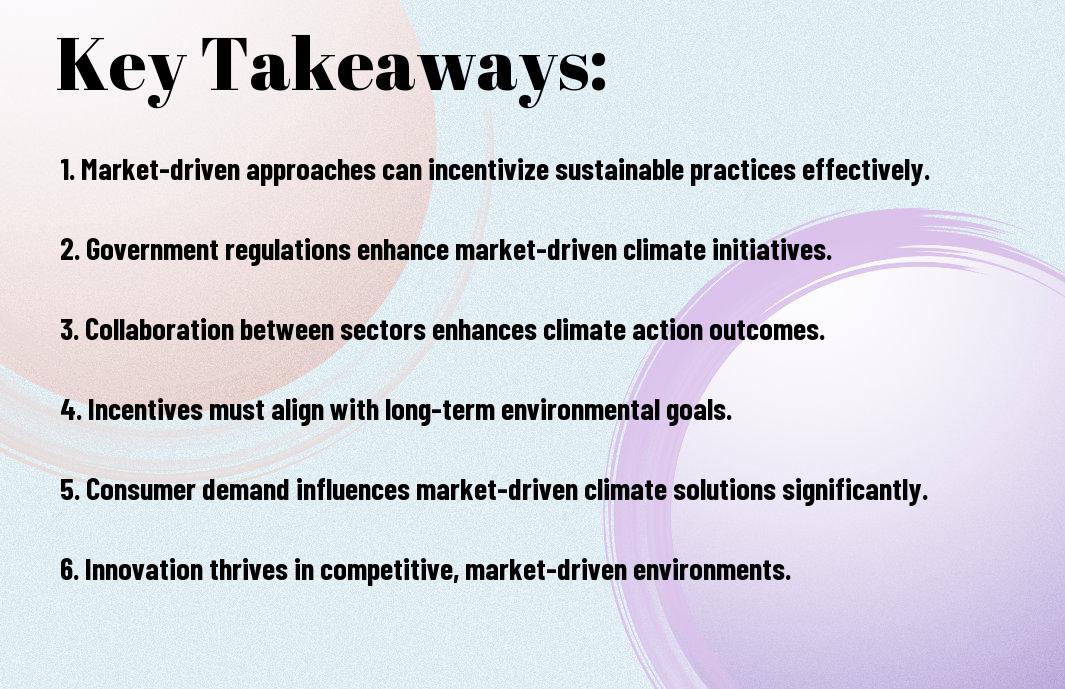
Key Takeaways:
- Market Efficiency: Emphasizing the role of market mechanisms can lead to more efficient allocation of resources for climate solutions.
- Innovation Incentives: Market-driven approaches may stimulate innovation and technological advancements in clean energy and sustainability.
- Investment Attraction: By providing financial incentives, a market-driven strategy can attract private investments into green initiatives.
- Regulatory Framework: A balanced regulatory framework is necessary to ensure that market-driven efforts do not compromise environmental goals.
- Equity Considerations: Addressing social equity is vital, as market-driven solutions can sometimes exacerbate inequalities if not managed carefully.
The Case for Market-Driven Climate Action
Before considering the implications of climate change, it’s imperative to recognize the potential of market-driven solutions. By harnessing the power of the free market, you can promote innovation and efficiency in environmental initiatives. This approach encourages businesses to develop sustainable technologies, streamline processes, and reduce emissions while still maximizing profit. With the right incentives and regulatory frameworks, market-driven climate action can lead to substantial advancements in sustainability, benefiting both the planet and the economy.
Economic Efficiency and Innovation
Against traditional regulatory measures, market-driven climate action offers a more efficient allocation of resources. When you allow the market to dictate solutions, companies are motivated to innovate, finding cost-effective methods to reduce their carbon footprint. This kind of competition fosters an environment where creative, environmentally-friendly technologies can thrive, leading to faster adoption and broader impact.
Leveraging Private Sector Investments
Any shift toward market-driven climate action relies heavily on private sector investments. By creating a landscape that encourages financial backing for sustainable projects, you can unlock immense resources that public funding often cannot match. This partnership between public policies and private initiative is key to addressing the pressing need for climate solutions.
Market-driven approaches to climate action can stimulate significant investment from the private sector. When you align financial incentives with environmental goals, businesses are more likely to allocate capital toward renewable energy projects, sustainable infrastructure, and green technologies. This investment can accelerate the implementation of initiatives that may have otherwise faced capital constraints, leading to greater overall impact in combating climate change. By fostering an environment that prioritizes sustainability, you can ensure that the necessary funds flow into innovative climate solutions.
Critiques of Market-Driven Approaches
Assuming that climate action should primarily rely on market mechanisms, many critiques emerge. Market-driven approaches can sometimes prioritize profits over genuine environmental sustainability, leading to a superficial commitment to green initiatives. This can result in solutions that are opportunistic rather than effective. Moreover, you might find that the desire for financial gain overshadows imperative considerations for ecosystems and communities most affected by climate change.
Short-term Focus vs. Long-term Goals
Focus on immediate financial returns often undermines the long-term goals that climate action aims to achieve. Market-driven strategies may prioritize quick rewards, leaving broader, more sustainable objectives at risk. You should consider how this short-sightedness can hinder progress in addressing the complex challenges of climate change, resulting in less impactful efforts.
Environmental Justice Concerns
Longterm implications of market-driven policies often neglect marginalized communities disproportionately impacted by environmental degradation. You may notice that a profit-driven approach can exacerbate existing inequalities, as companies may ignore the voices and needs of those in vulnerable positions. This raises questions about equity and responsibility in climate action.
Goals for environmental justice aim to ensure that all communities, particularly the underprivileged, are included in climate solutions. It’s imperative for you to recognize that market-driven approaches often overlook these populations, leading to their further disenfranchisement. By centering equity in climate action, you can push for policies that genuinely address the needs of those most affected, ensuring that solutions are comprehensive and just.
Case Studies of Market-Driven Solutions
Keep exploring various market-driven solutions that have demonstrated their effectiveness in tackling climate change. Notable case studies include:
- California’s cap-and-trade program, resulting in a 13% reduction in emissions since 2012.
- Germany’s Energiewende initiative, which has led to a 40% reduction in greenhouse gas emissions by 2020.
- Solar energy installations in the U.S., which are projected to create 1.3 million jobs by 2025.
- Copenhagen’s climate adaptation strategy, reducing flood risk by investing over €1 billion in infrastructure.
Carbon Pricing Models
Between various carbon pricing models, countries have adopted innovative strategies to monetarily value emissions. By implementing carbon taxes or cap-and-trade systems, you have the ability to encourage businesses to lower their carbon footprints. For instance, Sweden’s carbon tax has led to a substantial decrease in emissions by 25% since its enactment in 1991, showcasing the potential impacts of market-driven solutions.
Successful Green Investment Initiatives
Behind the scenes of impactful climate action, successful green investment initiatives have emerged as viable options for sustainable development. These projects focus on renewable energy, energy efficiency, and sustainable agriculture, which provide financial returns while mitigating environmental impacts.
To implement successful green investment initiatives, you can look at various models that fund renewable energy projects or energy-efficient technologies. Investments in wind and solar energy have shown high returns, with global renewable energy investments exceeding $300 billion in 2020. By fostering partnerships between governments and private sectors, you can support projects that not only drive financial growth but also promote ecological sustainability, ensuring a prosperous future for generations to come.
Policy Frameworks Supporting Market-Driven Action
For effective climate action, robust policy frameworks are crucial to facilitate market-driven solutions. These frameworks create the environment where businesses can thrive while addressing environmental challenges. By aligning economic interests with sustainability goals, you can empower companies to innovate and invest in green technologies, paving the way for a sustainable economy. This approach leverages market forces while addressing the urgency of climate change.
Regulatory Measures
By implementing clear regulatory measures, governments can guide the market towards sustainable practices. These regulations can include emissions standards, mandatory reporting, and penalties for non-compliance. When you support policies that enforce environmental guidelines, you promote corporate accountability and encourage companies to adopt cleaner technologies, ultimately benefiting both the planet and your community.
Incentives for Sustainable Practices
Along with regulations, governments can offer incentives to encourage businesses to adopt sustainable practices. These can take the form of tax breaks, grants, or subsidies for companies investing in renewable energy or eco-friendly technologies. By providing these financial incentives, you help to lower the barriers for businesses to integrate sustainability into their operations, making it a more attractive option.
In fact, these incentives create a win-win situation where businesses save money while contributing to environmental goals. When you advocate for such policies, you facilitate an environment where innovation thrives, allowing companies to explore new technologies and sustainable practices without the heavy burden of upfront costs. This approach not only enhances market competitiveness but also plays a significant role in driving climate action at scale, ensuring a cleaner, healthier planet for future generations.
The Role of International Cooperation
Now, international cooperation is vital in addressing climate change effectively. You may find that collaborative efforts among nations can amplify the impact of market-driven strategies. Initiatives like carbon trading and emission reduction agreements can foster progress by aligning interests globally. For insight into these approaches, check out Market-based solutions to climate change.
Global Market Dynamics
Alongside government policies, global market dynamics play a pivotal role in shaping climate action. By investing in sustainable technologies and renewable energy, you can help drive demand that incentivizes innovation within the private sector. A market-driven approach can create momentum for change, establishing international standards and practices that benefit the environment.
Collaborative Approaches to Climate Solutions
Behind successful climate initiatives are collaborative approaches that involve various stakeholders, including governments, corporations, and NGOs. You might consider how these partnerships can mobilize resources and expertise, resulting in more comprehensive solutions. By engaging in dialogue and sharing knowledge, you can contribute to collective progress toward climate resilience.
It’s vital to recognize that collaborative approaches not only foster innovation but also build trust among stakeholders. By participating in international forums and forming alliances, you can exchange best practices and lessons learned. These partnerships enable you to address challenges more effectively, as they leverage diverse perspectives and resources. Ultimately, working together enhances your ability to tackle climate change and creates a unified front for achieving sustainable outcomes.
Future Perspectives on Climate Action
Once again, as the landscape of climate action evolves, the integration of market-driven strategies and community engagement will shape how you approach sustainability. Understanding the future perspectives on climate action can help you align your practices with emerging trends, ensuring your efforts are both impactful and relevant to the changing climate scenario.
Predictions for Market Trends
Around the globe, experts anticipate that market trends will increasingly favor sustainable practices and renewable technologies. As consumers become more environmentally conscious, businesses that prioritize eco-friendly solutions will likely experience growth. This shift can create opportunities for you to innovate and adapt, aligning your operations with future market demands.
Integrating Community Engagement and Market Forces
By fostering a strong connection between community needs and market opportunities, you can drive effective climate action. Engaging local stakeholders not only elevates public awareness but also ensures that your initiatives are grounded in real-world challenges, leading to more sustainable and profitable outcomes.
To fully harness the power of integrating community engagement and market forces, you should actively seek input from local residents, businesses, and organizations. This collaboration allows you to identify specific environmental challenges and tailor your strategies accordingly. By doing so, you create not only economic value but also a more resilient community that is equipped to face climate challenges together, maximizing the effectiveness of your climate action initiatives.
Final Words
Upon reflecting, you may conclude that whether climate action should be market-driven ultimately depends on balancing economic incentives with environmental responsibility. A market-based approach can drive innovation and efficiency, leading to effective solutions, yet it must be complemented by strong regulatory frameworks to ensure accountability. As you consider the implications of this debate, it’s crucial to acknowledge that your choices and advocacy can contribute to shaping a sustainable future that respects both the economy and the planet.
FAQ
Q: What are the benefits of a market-driven approach to climate action?
A: A market-driven approach to climate action can lead to increased innovation and efficiency. By leveraging market mechanisms, businesses are incentivized to develop sustainable technologies and practices that reduce emissions. This competition can result in cost-effective solutions as companies strive to gain a competitive edge. Furthermore, market-driven initiatives can mobilize private investment in renewable energy and other climate solutions, which can supplement government funding and resources.
Q: Are there potential drawbacks to relying on market mechanisms for climate action?
A: Yes, relying solely on market mechanisms for climate action can lead to some drawbacks. Market volatility may result in inconsistent investment in sustainable projects, making it challenging to establish long-term strategies. Additionally, without regulation, there’s a concern that companies might prioritize short-term profits over long-term environmental sustainability. This could lead to practices that undermine the very objectives climate action aims to achieve, such as over-exploitation of resources or greenwashing, where companies falsely market their practices as environmentally friendly.
Q: How can government policies complement market-driven climate actions?
A: Government policies can play a vital role in supporting market-driven climate actions by providing a regulatory framework that encourages sustainability. This can include the implementation of carbon pricing, tax incentives for renewable energy projects, and strict emissions regulations. By establishing clear guidelines and incentives, governments can ensure that market-driven solutions align with public interests and environmental goals. Additionally, governments can invest in research and development and support education initiatives to foster innovation in green technologies that the market can then adopt.



Recent Comments