With the growing interest in environmental sustainability, you may wonder whether the green economy can truly benefit everyone. This blog post explores the concept of a green economy, examining its potential advantages and challenges. You will gain insights into how this shift impacts different communities, industries, and your own lifestyle choices. By understanding these dynamics, you can better navigate your role in fostering a sustainable future that includes everyone.
Key Takeaways:
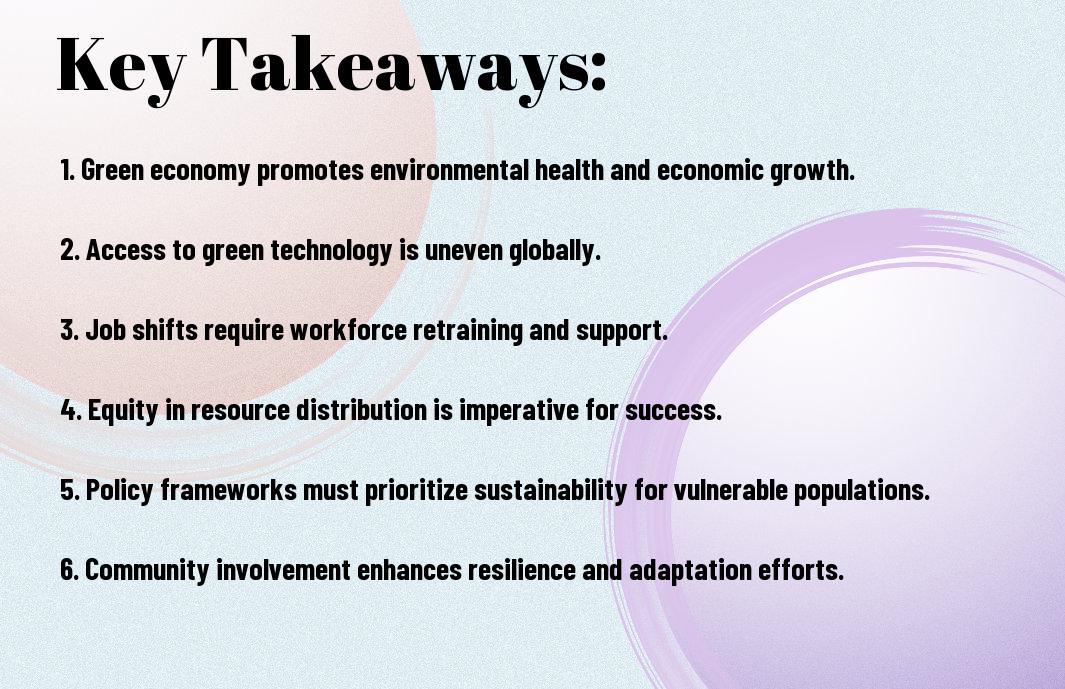
- Inclusivity: The Green Economy must prioritize marginalized communities to ensure equitable access to resources and opportunities.
- Economic Stability: Transitioning to sustainable practices should not compromise traditional livelihoods; instead, it should create new economic avenues.
- Environmental Impact: A focus on renewable resources can significantly reduce carbon footprints, benefiting both the planet and its inhabitants.
- Policy Framework: Effective regulations and incentives are needed to support a transition that fosters sustainability while addressing social inequalities.
- Education and Awareness: Raising awareness about green practices is important to empower individuals and communities to participate actively in the Green Economy.
Defining the Green Economy
Your understanding of the green economy encompasses economic systems that prioritize environmental health, resource conservation, and social equity. This model seeks to create sustainable jobs while minimizing ecological harm, promoting renewable energy, and fostering sustainable production and consumption patterns. By integrating these principles, the green economy aims to balance economic growth with the preservation of natural resources, ensuring a healthier planet for current and future generations.
Principles of Sustainability
At the core of sustainability are three interconnected principles: environmental integrity, social equity, and economic viability. These principles guide efforts to create systems that not only support human life but also safeguard the planet’s ecosystems. When you embrace these principles, you contribute to practices that enhance resilience, reduce waste, and ensure equitable access to resources, fostering a just and sustainable future for all.
Economic Growth vs. Environmental Protection
Against the backdrop of the green economy, you may find a debate brewing between the concepts of economic growth and environmental protection. While traditional economic models often prioritize growth at the expense of natural resources, the green economy advocates for a balance that allows for sustainable development without depleting the earth’s ecosystems. This juxtaposition raises important questions about the viability of unfettered growth in an era of climate change and environmental degradation.
But balancing economic growth with environmental protection is increasingly viewed as crucial for long-term prosperity. Many argue that sustainable practices can drive innovation and open new markets, ultimately enhancing economic resilience. By investing in clean technologies and renewable resources, you can create job opportunities while mitigating environmental impacts. Shifting the focus from short-term gains to long-term sustainability allows for a more harmonious coexistence between human activities and nature, fostering a healthier planet for generations to come.
Current Trends in the Green Economy
Clearly, the green economy is experiencing rapid evolution, driven by an increasing awareness of environmental issues and the necessity for sustainable practices. You will notice that various sectors are striving to integrate eco-friendly solutions, emphasizing renewable resources, sustainable agricultural methods, and green technologies that contribute to both economic growth and environmental preservation.
Renewable Energy Initiatives
At the forefront of the green economy are renewable energy initiatives that focus on harnessing natural resources like wind, solar, and hydroelectric power. You may find that governments and organizations are investing heavily in these sectors, which not only reduce carbon emissions but also provide jobs and stimulate local economies.
Sustainable Agriculture Practices
Green farming techniques, including crop rotation, organic farming, and agroforestry, are transforming food production. You might explore how these practices enhance biodiversity and soil health while reducing reliance on chemical fertilizers and pesticides, thus creating a more sustainable food system.
For instance, many farmers are adopting permaculture techniques, which emphasize working with natural ecosystems to cultivate crops. You can see how this approach not only improves yield but also minimizes waste and conserves water. By understanding and implementing methods like regenerative agriculture, you empower yourself to support food systems that are productive, resilient, and environmentally friendly.
Social Equity and the Green Economy
All individuals should have a voice in shaping the green economy. Yet, achieving social equity requires addressing systemic inequalities that exist within our economic systems. Efforts to harness sustainable practices must prioritize inclusivity to ensure that every community benefits from environmental advancements while minimizing negative impacts.
Access to Green Jobs
An inclusive green economy needs to provide equitable access to green jobs for all. This means creating training programs and opportunities specifically designed for underrepresented communities, ensuring everyone can participate in and benefit from the transition to renewable energy and sustainable practices.
Impacts on Marginalized Communities
The transition to a green economy can exacerbate existing disparities for marginalized communities if not approached thoughtfully. Often, these communities find themselves disproportionately affected by environmental changes and policies, leading to economic disadvantages and reduced opportunities for advancement.
A targeted approach is necessary to mitigate these impacts and support marginalized communities through the green transition. You can advocate for policies that recognize and address the specific needs of these populations, such as creating local employment opportunities in clean energy sectors, providing equitable access to resources, and including them in decision-making processes. By promoting inclusivity, you help ensure that the benefits of a sustainable economy reach everyone, ultimately leading to a more robust and fair economic future for all.
Economic Implications of the Green Economy
Keep in mind that the green economy introduces a transformative approach to economic growth by prioritizing environmental sustainability. By incorporating renewable energy, green technologies, and sustainable practices, businesses not only reduce their ecological footprint but can also tap into new markets. However, the transition may present challenges, requiring significant investment in research, infrastructure, and workforce retraining to fully realize the economic potential of green initiatives.
Short-term Costs vs. Long-term Benefits
By investing in green technologies and practices today, you may face short-term financial burdens, but these costs can yield substantial long-term benefits. Energy-efficient solutions can lower operating expenses over time, while sustainable practices can enhance brand loyalty and customer trust, ultimately leading to increased profitability and resilience in the face of environmental regulations.
Global Market Opportunities
Behind the shift towards a green economy lies a wealth of global market opportunities tailored for sustainability-focused businesses. As consumers and governments worldwide demand eco-friendly products and services, companies that adopt green initiatives not only gain a competitive edge but unlock new avenues for growth in emerging markets.
Consequently, aligning your business strategy with global sustainability trends can enhance your positioning in the market. You can explore opportunities such as renewable energy, eco-tourism, and sustainable agriculture, which cater to a growing consumer base that prioritizes environmental responsibility. Engaging in these markets not only broadens your reach but strengthens your commitment to sustainable development, ultimately benefiting both your company and the planet.
Challenges to Sustainability
Now, while the green economy presents many opportunities, it also faces significant challenges that could hinder its sustainability. Issues such as inequality in access to green technologies, reliance on traditional energy sources, and resistance to change complicate the transition. Addressing these barriers is necessary for ensuring that the benefits of a green economy are shared equitably among all communities and stakeholders.
Policy Barriers and Regulations
Challenges in policy formulation and outdated regulations can slow the progress of green initiatives. You might find that existing laws often favor conventional industries, creating a disadvantage for green businesses. These policy barriers demand attention to foster an environment where sustainable practices can thrive.
Consumer Behavior and Market Demand
The shift towards a sustainable economy is also challenged by consumer behavior and market demand. You may notice that despite growing awareness of environmental issues, many consumers still prioritize convenience and cost over sustainability. This trend, influenced by entrenched habits and perceptions, can significantly impact the demand for green products and services.
Considering the importance of consumer behavior, it’s necessary to recognize that your choices have the power to drive market trends. However, traditional buying habits often clash with sustainable options, leading to reduced demand for green products. Educating yourself and others about the benefits of sustainable choices can help shift the market towards more eco-friendly alternatives, ultimately fostering a culture of environmental responsibility and sustainability.
Case Studies of Successful Green Economy Models
Once again, various nations showcase successful green economy models that can inspire widespread adoption globally. Here are some remarkable examples:
- Sweden: Reduced emissions by 25% since 1990, investing 17% of GDP in green technology.
- Germany: Gained 400,000 jobs in the renewable energy sector through the Energiewende policy.
- New Zealand: Achieved a 95% renewable energy share in electricity, focusing on hydro and wind power.
- Denmark: Generates 47% of its electricity from wind, leading the world in wind energy production.
- South Korea: Invested $80 billion in its Green New Deal, aiming for carbon neutrality by 2050.
Examples from Developed Nations
To see concrete results of green economy initiatives, look at developed nations, like Norway, which has a target to be carbon neutral by 2030. The country has heavily invested in electric vehicle infrastructure, leading to over 54% of new car registrations being electric in 2021. Additionally, Finland has implemented a circular economy strategy that aims to minimize waste and make the most of resources, fostering a sustainable lifestyle.
Strategies in Developing Nations
The sustainable transformation in developing nations often revolves around leveraging local resources and innovation. Many countries are focusing on community-based renewable energy solutions that empower locals and reduce reliance on fossil fuels.
Developing nations are increasingly adopting strategies that fit their unique contexts. For instance, India’s Solar Mission aims to reach 100 GW of solar power by 2022, showcasing a commitment to renewable energy. Ethiopia has harnessed hydropower, intending to generate 60% of its electricity from renewable sources. These strategies highlight how adapting to local conditions and utilizing available resources can effectively push green economic agendas forward, proving that sustainability is achievable on all levels, empowering communities and fostering economic growth.
Final Words
To wrap up, you should consider that the sustainability of the Green Economy hinges on inclusivity and equitable access for all stakeholders. Your engagement in sustainable practices can help drive a collective effort towards creating systems that benefit the environment and society as a whole. The transition to a Green Economy is not merely an environmental goal but one that demands your active participation for it to be genuinely sustainable across different communities. For more insights, explore resources on Green Economy.
Q: What is the Green Economy and how does it promote sustainability?
A: The Green Economy is an economic framework that aims to enhance human well-being and social equity while significantly reducing environmental risks and ecological scarcities. It focuses on sustainable practices in sectors such as energy, transportation, and agriculture. By promoting renewable energy sources, efficient resource use, and responsible waste management, the Green Economy seeks to create jobs and stimulate innovation while minimizing adverse environmental impacts. Sustainable practices within this framework can lead to a more resilient economy that benefits both current and future generations.
Q: Are the benefits of the Green Economy accessible to all communities?
A: While the Green Economy presents numerous opportunities, accessibility can vary among different communities. Factors such as socioeconomic status, geographic location, and existing infrastructure can affect the ability of certain populations to participate in or benefit from green initiatives. Efforts are being made to ensure inclusivity by focusing on policies that specifically target marginalized communities, promoting equitable access to sustainable technologies, and supporting education and training programs that empower underrepresented groups in the green job market.
Q: What challenges does the Green Economy face in achieving sustainability for all?
A: Several challenges can hinder the Green Economy’s potential to be sustainable for all. These include resistance from established industries that may be negatively impacted by transitioning to greener practices, a lack of governmental support or investment in sustainable infrastructure, and potential disparities in financial resources available to different regions or communities. Additionally, differing priorities among stakeholders can complicate collaborative efforts. Addressing these challenges requires coordinated policies, public engagement, and innovative funding solutions that cater to a wide range of socioeconomic backgrounds.


Recent Comments