Content creation focused on climate change can significantly influence public awareness and action. To captivate your audience, you need to blend accurate information with compelling narratives. Incorporating relatable stories, impactful visuals, and interactive elements can enhance engagement. Additionally, look to resources like Engaging people in climate action for practical tips that resonate with different communities. By making your content relatable, you can inspire positive change and motivate action on this pressing issue.

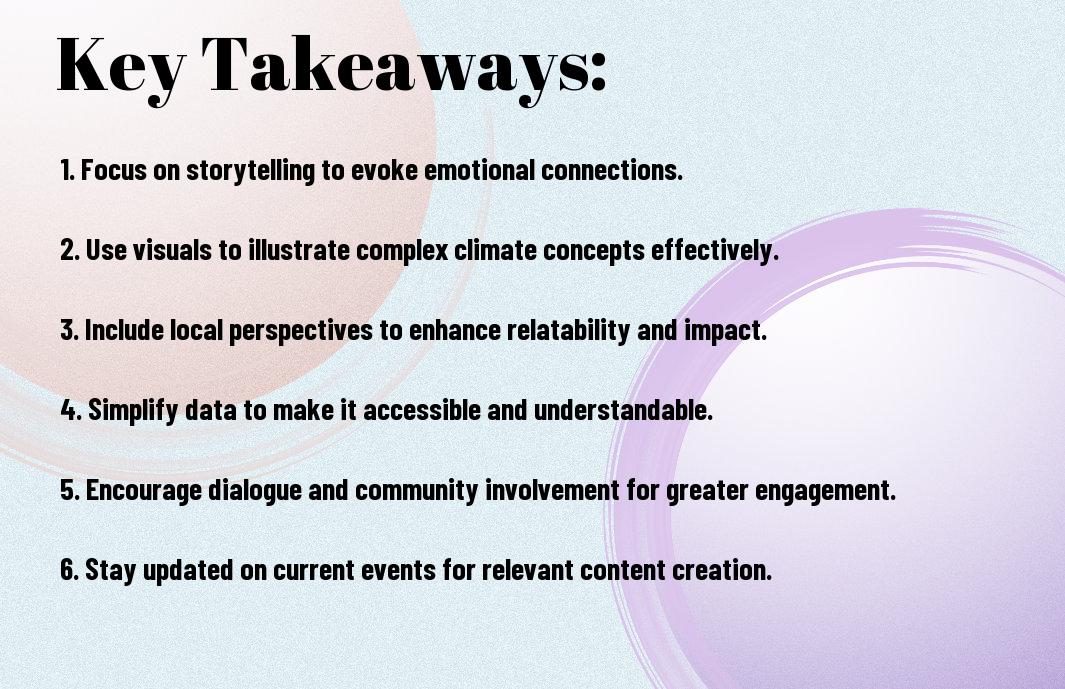
Key Takeaways:
- Know Your Audience: Tailor your content to resonate with the specific interests and concerns of your target audience.
- Utilize Storytelling: Engage your readers through compelling narratives that illustrate the human impact of climate change.
- Incorporate Visuals: Use impactful images, infographics, and videos to enhance understanding and retention of information.
- Present Solutions: Highlight actionable steps and positive changes that individuals and communities can undertake to combat climate change.
- Encourage Interaction: Foster engagement by inviting comments, questions, and sharing opportunities to create a community around your content.
Understanding Climate Change
Your journey into climate change begins with acknowledging its complexity. Climate change refers to the long-term alteration of temperature and typical weather patterns in a place. It poses significant challenges not just to the environment but to society as well. Grasping the basic principles behind climate change enables you to create content that resonates and informs others of the urgency and importance of the subject.
The Science Behind Climate Change
Against a backdrop of natural climate cycles, human activities have significantly accelerated the warming of our planet. Emissions from burning fossil fuels, deforestation, and industrial processes release greenhouse gases that trap heat in the atmosphere. Understanding how these elements interact is vital for effectively communicating the science of climate change to your audience.
Current Trends and Impacts
An alarming signal of climate change manifests in the rising global temperatures and shifting weather patterns. Reports indicate an increase in extreme weather events, such as hurricanes and droughts, leading to loss of life and property. These changes do not just threaten ecosystems but also impact agriculture, water resources, and public health.
Another important aspect to consider is how vulnerable communities bear the brunt of these impacts. Low-lying areas face rising sea levels, while regions susceptible to drought or flooding experience food insecurity and displacement. By focusing on these trends, you can highlight the local and global stories connected to climate change, ensuring your content is relatable and impactful.
Identifying Your Audience
Some of the most impactful climate change content stems from a deep understanding of your audience. By identifying who your readers are, you can craft messages that resonate with their values, beliefs, and experiences. Engaging content is relevant, so tap into your audience’s interests and motivations to inspire meaningful conversations about climate issues.
Demographics and Psychographics
Before creating your content, consider the demographics and psychographics of your audience. Demographics include age, gender, income level, and education, while psychographics explore into attitudes, values, and lifestyle choices. Understanding these factors will help you fine-tune your content to appeal to specific groups, ensuring it meets their unique preferences and concerns.
Tailoring Your Message
By tailoring your message to fit your audience’s specific needs, you increase the likelihood of engaging them effectively. Crafting targeted content requires you to connect with their emotions, challenge misconceptions, and provide actionable insights that align with their values.
In fact, this approach helps you create a more immersive experience for your readers, fostering loyalty and encouraging them to share your message. When you frame climate change topics through the lens of your audience’s lived experiences, they are more likely to relate to the content and take action. Implementing various storytelling techniques, visuals, and relevant data can further enhance the impact of your tailored message, making it memorable and actionable.
Crafting Engaging Content
To create engaging climate change content, focus on a relatable narrative that resonates with your audience. Use precise language and clear arguments to convey your messages effectively. Incorporating diverse perspectives, such as personal stories or expert insights, can help enrich your content and make it more compelling. Aim for a balance between factual information and emotional appeal to inspire your readers and motivate action.
Storytelling Techniques
Storytelling is a powerful way to humanize the issue of climate change. You can craft narratives that illustrate real-life impacts or solutions, allowing readers to connect emotionally with your message. Using characters, personal journeys, and even anecdotes can turn complex data into memorable stories. This approach not only captures attention but also encourages empathy and a deeper understanding of the challenges we face.
Utilizing Visuals and Multimedia
By integrating visuals and multimedia into your content, you enhance engagement and comprehension. Eye-catching images, infographics, videos, and interactive elements can break down complex information and make it more accessible. Visual storytelling can convey emotions powerfully, making your message stick in the minds of your audience.
Hence, utilizing visuals and multimedia provides an opportunity to amplify your message effectively. High-quality images can illustrate the impact of climate change, while infographics can simplify data and highlight key statistics. Moreover, videos allow for dynamic storytelling, showcasing testimonials or real-time issues in action. Consider interactive elements like quizzes or maps to foster engagement and encourage further exploration of the topic. Visuals are crucial tools in helping you connect with your audience and make climate change content more impactful.
Choosing the Right Platforms
Not all platforms are created equal when it comes to engaging climate change content. Understanding where your target audience spends their time is imperative to maximize your message’s impact. Whether it’s social media, blogs, or podcasts, each platform caters to different demographics and user preferences. Tailoring your content to fit the unique characteristics of each platform will enhance engagement and broaden your reach, ensuring that your climate change message resonates effectively.
Social Media Strategies
By leveraging social media, you can create dynamic content that captivates and informs. Utilize visually compelling images, infographics, and videos to simplify complex climate concepts. Engaging with followers through comments and polls also fosters community involvement, encouraging others to participate and share your content with their networks, amplifying your reach.
Blogging and Long-Form Content
Content that dives deep into issues surrounding climate change can significantly enhance your credibility. By providing comprehensive insights and actionable solutions, you engage your audience on a deeper level, fostering both awareness and action.
Due to the complexity and urgency of climate change issues, long-form content offers the opportunity to explore topics in greater detail. This not only showcases your expertise but also allows you to present thorough arguments, case studies, and real-world examples. Incorporating keyword optimization in your blog can also improve search visibility, driving more traffic to your site and establishing a space for dialogue about meaningful solutions.
Promoting Your Content
Despite the challenges of reaching a broad audience, effectively promoting your climate change content can significantly enhance its impact. Utilize social media platforms, engage with online communities, and consider the Eight Principles for Effective and Inviting Climate Communication to craft your messaging. Collaborating with influencers or organizations can expand your reach, ensuring your content resonates with various demographics and encourages constructive dialogue.
SEO Best Practices
Before promoting your climate change content, implement SEO best practices to increase its visibility. Focus on keyword research, optimize your titles and meta descriptions, and ensure your content is mobile-friendly. Creating high-quality, informative content that answers common questions will drive organic traffic to your site, making it easier for audiences to find your work.
Collaborations and Partnerships
Between forming partnerships with environmental organizations and engaging with like-minded creators, collaborations can broaden your content’s reach and enhance its credibility. By pooling resources and sharing networks, you can create more dynamic content that appeals to diverse audiences, amplifying your message and fostering community engagement.
Even small collaborations can generate significant results. Seek out local activists, organizations, or even fellow content creators who share your mission on climate change. Joint projects such as webinars, podcasts, or co-authored articles not only provide fresh perspectives but also allow you to tap into each other’s audiences, leading to increased visibility and engagement for your climate content.
Measuring Engagement and Impact
All climate change content creators should prioritize measuring engagement and impact to understand how effectively your message resonates with your audience. Analyze metrics such as shares, comments, and views to assess your content’s reach and influence. For guidance, check The five best content strategies for communicating climate and enhance your approach.
Analytics Tools
Engagement can be quantified using various analytics tools that track user interaction with your content. Platforms like Google Analytics and social media insights provide valuable data on how your audience engages with your posts, helping you refine your strategy for optimal results.
Feedback and Iteration
Engagement is also driven by direct feedback from your audience. Solicit opinions through surveys or social media interactions, allowing you to gain insights into what resonates with your readers. Use this information to iterate on your content, ensuring future posts are aligned with your audience’s interests.
Measuring the impact of your content involves ongoing adaptation based on performance metrics and audience feedback. By continuously assessing how well your messages are received, you can make data-informed decisions that enhance your future content, promoting deeper engagement with climate change topics.
Final Words
Summing up, when you set out to create engaging climate change content, focus on authenticity, storytelling, and providing actionable insights. Use vivid imagery and relatable examples to connect emotionally with your audience. Incorporate data and expert opinions to establish credibility, while ensuring your tone remains accessible. Encourage dialogue and invite your audience to take part in the conversation, fostering a sense of community around the issues at hand. By following these principles, you can elevate your content and effectively raise awareness about climate change.
Q: What are some effective strategies for creating engaging climate change content?
A: To create engaging climate change content, consider the following strategies:
1. Storytelling: Use personal stories or case studies to illustrate the impact of climate change on individuals and communities. This humanizes the issue and makes it relatable.
2. Visual Elements: Incorporate infographics, videos, and images to convey complex information in an accessible way. Visual content can capture attention and increase understanding.
3. Call-to-Action: Encourage your audience to take specific actions, whether it be reducing waste, supporting policy changes, or participating in local initiatives. Making your content actionable can empower and motivate readers.
By combining these strategies, your content can resonate more strongly with your audience.
Q: How can I ensure my climate change content reaches a wider audience?
A: To broaden the reach of your climate change content, use these techniques:
1. Social Media Promotion: Share your content across various social media platforms to tap into diverse audiences. Tailor your message to suit each platform for better engagement.
2. Collaborate with Influencers: Partner with environmental bloggers, activists, or organizations that have established audiences. Their endorsement can help amplify your message.
3. Search Engine Optimization (SEO): Optimize your content for search engines using relevant keywords related to climate change. This can improve your content’s visibility and attract organic traffic.
Implementing these tactics can enhance your content’s exposure and influence.
Q: What tone and language should I use when discussing climate change?
A: When discussing climate change, consider these aspects for tone and language:
1. Empathetic Tone: Maintain a tone that is sensitive and understanding, as climate change can be a distressing topic for many. Acknowledge concerns and encourage dialogue.
2. Clear and Accessible Language: Avoid jargon and complicated terminology. Use straightforward language to ensure that your content is understandable to a broad audience.
3. Positive Framing: While it’s important to address the severity of climate change, also highlight solutions and positive actions being taken. This balanced approach can inspire hope and motivate action.
By adopting this tone and language, your content can foster a more open and engaging conversation about climate change.



Recent Comments